Software Customization
Customize or rebuild software that no longer fits your business
If your existing product needs new features, different workflows, updated interfaces or a more substantial rebuild, My Faces Production can scope the changes around the way your business now operates. You can begin with the problem you need to solve, even if you are not sure which features or technical components will be required.
When customization or a rebuild may be worth discussing
-
Your current workflows have changed
The product may still work, but its screens, permissions or processes no longer match how your team handles the work.
-
Important features are missing
You may need additional customer features, administrative controls, reports, payment workflows or connections with other services.
-
Manual work sits around the software
Spreadsheets, repeated data entry or disconnected tools may indicate that agreed workflows or integrations should be added to the product.
-
The existing product needs a larger change
Where incremental changes are not the chosen approach, the product or selected parts can be rebuilt under a newly agreed scope.
What the work can cover
Customization changes an existing product to suit agreed business requirements. A rebuild recreates the agreed product or selected parts under a defined scope. Depending on the project, the work may involve customer-facing web or mobile interfaces, admin panels, backend APIs, databases, payment workflows or third-party integrations.
-
Enhance an existing product
Add or revise agreed features, screens and workflows so the software better reflects the current requirement.
-
Rebuild agreed parts
Replace selected interfaces, administrative tools or connected product components when the project calls for a broader change.
-
Adapt an existing My Faces Production demo
The owned product demos can provide a visible starting interface for discussion. Any changes, integrations and production work are defined and estimated as a separate customization project.
From the current problem to an agreed build
-
01
Review the situation
The discussion covers the current product, the problem you want to solve, the people who use it and the parts that need to change. If you are unsure about the solution, describe what is not working or what users need to do.
-
02
Define the scope
The required features, product parts, integrations, responsibilities and acceptance expectations are identified before the proposal is confirmed.
-
03
Implement and review
The team develops the agreed changes, shares progress and reviews the implemented functionality, user flows, interface and responsiveness.
-
04
Verify, deploy and hand over
Identified issues are corrected and checked again. Deployment and handover then follow the agreed project terms.
What you can receive
The proposal identifies the deliverables for your project. Depending on the agreement, these may include:
- A working application containing the agreed customization or rebuilt parts
- The implemented user interfaces, administrative views and workflows included in scope
- Configured APIs, databases or integrations where those components are included
- A deployed website or web application, or a prepared mobile build, when deployment is included
- Source code and project files when custom development or the agreement includes source delivery
- Agreed setup, deployment, environment or main-feature instructions
- Repository access, a product walkthrough or training when included in the agreement
Owned product interfaces you can inspect
My Faces Production has public product demos that show existing interfaces and workflows which may be adapted under a new scope. These are owned demonstrations, not customer implementations or evidence of measured business results.
-
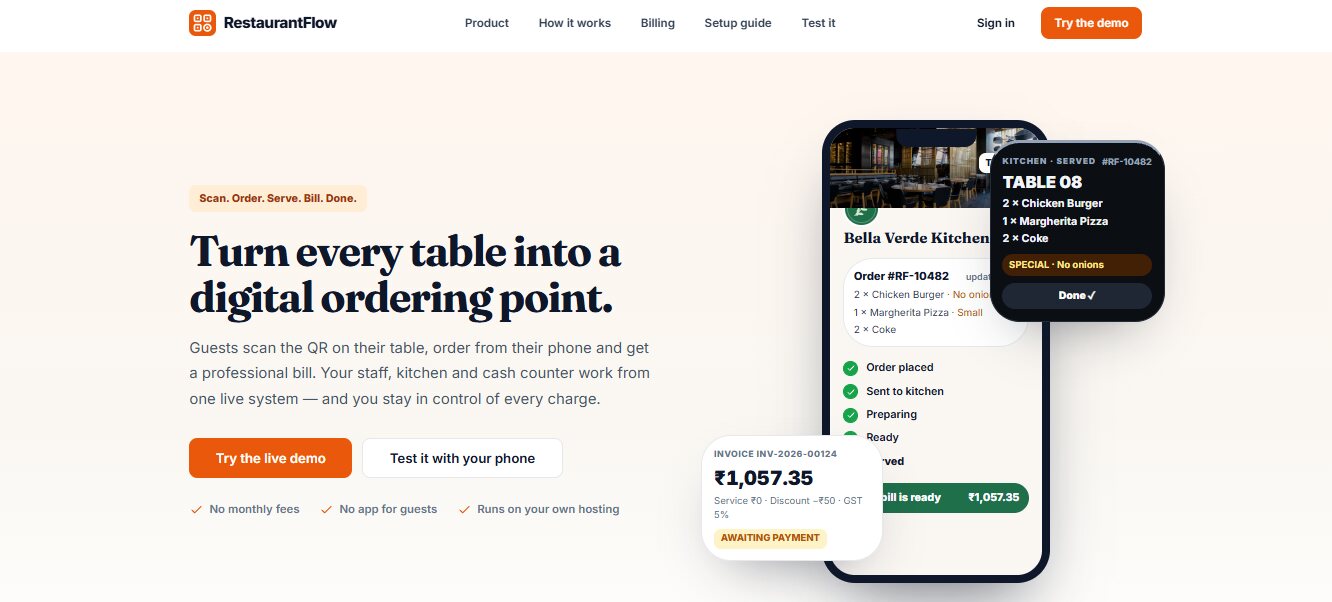
Restaurant software · Web
RestaurantFlow
This demo shows menu and table ordering, order tracking, kitchen and administrative views, configured billing and reports. In a public sample observed on 9 October 2026, switching off the 10% service-charge control set that charge to zero and recalculated the displayed total.
-
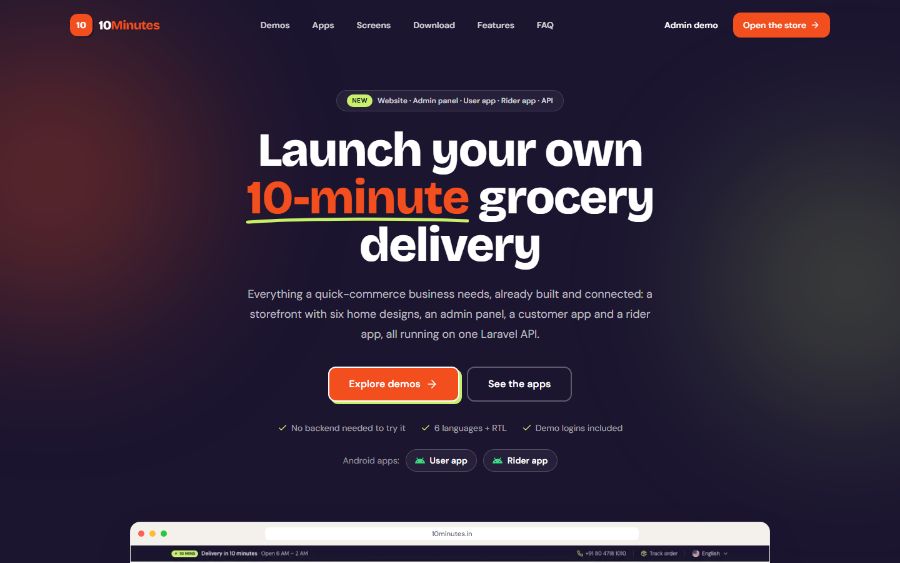
Grocery delivery · Web + Android
10Minutes
This grocery-delivery demo presents six storefront home designs, a customer shopping interface and customer and rider Android apps.
-
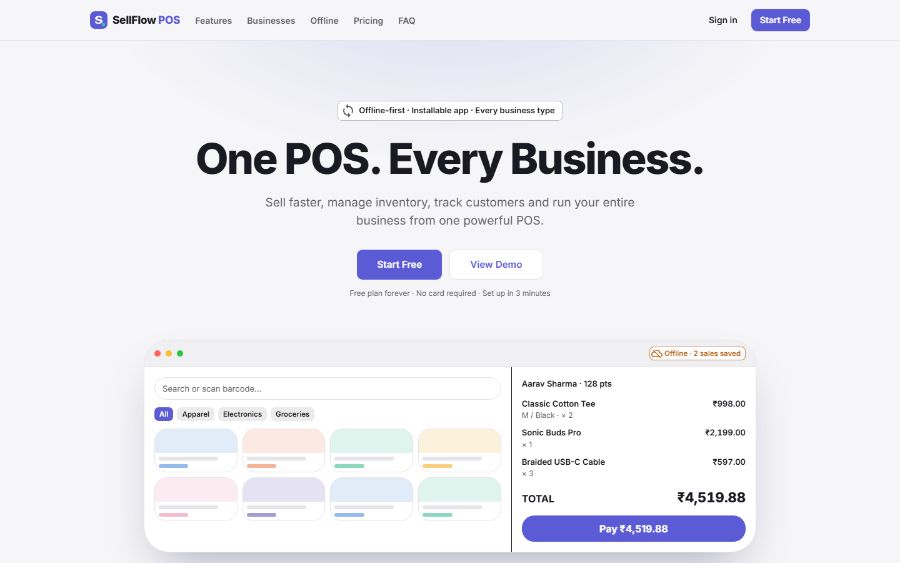
POS & billing · Web
SellFlow
This POS and business-management interface demo presents checkout, inventory, customer, staff and reporting views.
Review before acceptance
The development team reviews implemented functionality, user flows, interface design and responsiveness. For RestaurantFlow, the confirmed review example includes menu and table-ordering flows, order details, billing calculations for configured charges and the interface at different screen sizes. Identified issues are corrected and checked again. You can inspect the agreed features and workflows and report issues under the acceptance terms. Independent assessment, formal certification, penetration testing, extensive automated testing and written test reports are included only when specifically agreed.
Scope, access and ongoing costs
The deliverables, responsibilities, exclusions, costs and handover arrangements are agreed before work begins.
- What can be changed depends on the agreed requirements, the product access you can provide and the terms governing third-party components.
- Hosting, cloud usage, domains and third-party API, licence, payment-provider or app-store fees are separate unless explicitly included.
- Only the features, integrations, workflows and platforms listed in the scope are included; additions require a separate estimate.
- You provide the required business information, content, branding, account access and provider verification unless the agreement says otherwise.
- App-store accounts, listing information, privacy disclosures and account-owner requirements remain client-supplied; approval is controlled by the relevant store.
- Monitoring, backups, dependency updates, future features and ongoing infrastructure management are separate unless included in a support or maintenance agreement.
Is this the right service for your project?
This service is intended for businesses, startups and entrepreneurs planning a substantive change to an existing product or an agreed rebuild. It is most useful when there is a business problem, workflow or product direction to define, even if the exact feature list is not yet clear. Requests limited to a tiny isolated change are unlikely to be the right starting point.
Questions before you enquire
Do I need a complete feature list?
No. You can begin by explaining what your current software does, what is not working and what users need to accomplish. It is fine to say that you are not sure about the required features, product components or integrations.
How are cost and timeline determined?
The current product, requested changes, required product parts, integrations, available access, preferred timing and acceptance requirements are reviewed first. The resulting proposal sets out the price, timeline, deliverables, responsibilities and project terms.
Will I receive the source code?
Source and project files are included for custom development when the agreement provides for source delivery. Repository access, documentation and third-party licensing conditions are confirmed in the project terms.
What happens after launch?
Post-launch support depends on the agreement. Defects in delivered functionality are handled under the agreed support terms, while new features, integrations, design changes, maintenance, monitoring and ongoing deployment management have their own scope.
Start with what needs to change
Share the existing product, the problem you are trying to solve and any timing or integration requirements you already know. If the technical route is unclear, describe the current workflow and the outcome you need from the software.