
E-commerce Development
E-commerce development for the way your business sells
You may need to launch an online store, replace an outdated website or bring product, order and customer management into one system. My Faces Production builds e-commerce websites around the products you sell, the steps your customers follow and the administration your team needs.
When a new online store becomes necessary
E-commerce development may be useful when customers cannot buy from your current website, staff are handling orders through disconnected tools, or an existing store no longer matches how the business operates.
- You want to begin selling products online.
- Your current store needs different features, workflows or administration.
- Product, order and customer information is difficult to manage.
- You need payment or third-party services connected to the store.
- You have a business problem but are not yet sure which store features will solve it.
What the development work can cover
The store is planned around the agreed customer journey and administrative work. The parts included depend on what your business needs rather than a fixed package.
-
Customer storefront
A web experience for browsing products, reviewing product information and moving through the agreed basket, checkout and account flows.
-
Product and order administration
Administrative interfaces for managing the agreed product information, orders and customer records.
-
Payments
Payment gateway integration and transaction workflows can be included when specified in the project scope. Merchant approval, verification, fees, settlements, refunds and provider requirements remain subject to the selected payment service.
-
Backend and integrations
APIs, databases and connections to agreed third-party services can be scoped where the store requires them.
What you receive
The core output is a working online store with the customer-facing and administrative workflows agreed for the project. If deployment is included, the website or web application is configured on a suitable platform and checked in its deployment environment. The applicable deployed links and agreed setup or deployment instructions are then handed over.
- The agreed storefront and administration interfaces
- The product, order, customer and payment workflows included in the scope
- A reviewable working application
- Source and project files when custom development includes source-code delivery
- Repository access, documentation, training and operational guidance where agreed
E-commerce interfaces you can inspect
These My Faces Production-owned product demos show storefront and order-management interface work. They are not evidence of live customer use, completed deliveries or measured business results.
-
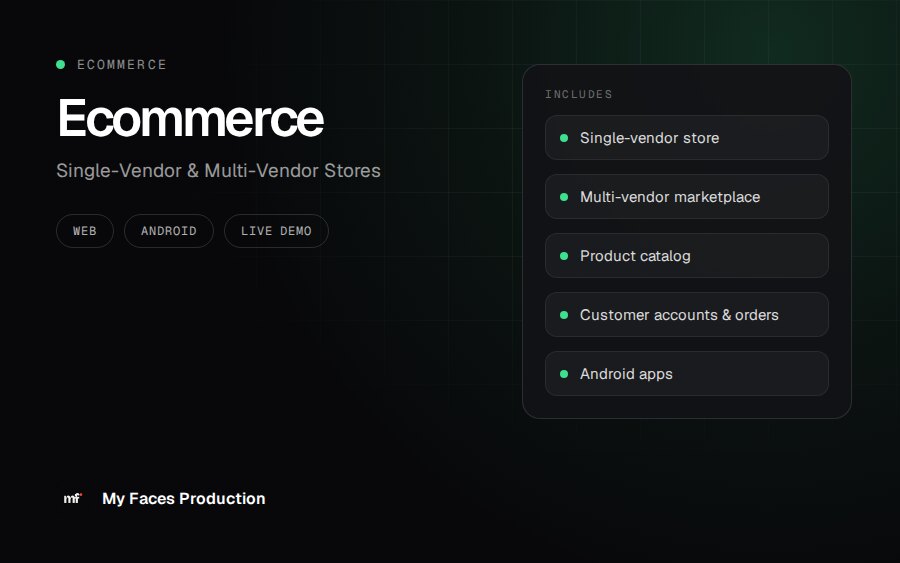
Ecommerce · Web + Android
Ecommerce
An ecommerce demo in two editions: a single-vendor store for one business, and a multi-vendor marketplace with vendor accounts and central administration — each with an Android app.
-
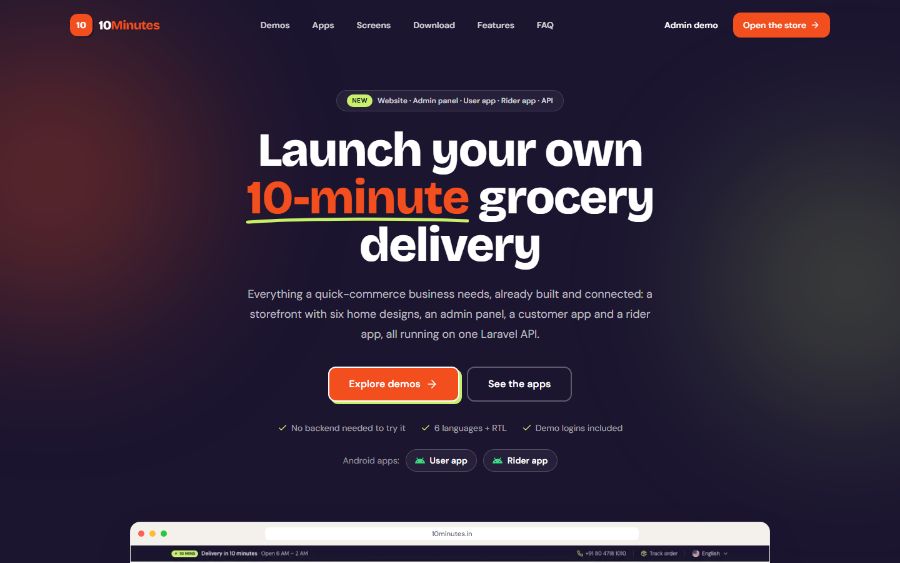
Grocery delivery · Web + Android
10Minutes
10Minutes is a grocery-delivery demo. Its public storefront includes search, shopping categories, a basket control and six homepage design choices, alongside customer and rider Android apps.
From your selling process to an agreed build
-
01
Describe the situation
Start with what you sell, how customers currently order and what is difficult for customers or staff. You do not need to arrive with a feature list, architecture or technical specification.
-
02
Define the store
The discussion identifies target users, required workflows, product and order needs, payment or service integrations, existing systems and the intended launch.
-
03
Agree scope and terms
The proposed deliverables, responsibilities, exclusions, costs, timeline and handover arrangements are defined before development begins.
-
04
Build, review and deploy
The agreed store is developed, shared for review, corrected where required under the scope and deployed when deployment is included.
Review and scope boundaries
The development team reviews implemented functionality, user flows, interface design and responsiveness. Identified issues are corrected and checked again, and you can inspect the implemented features and agreed workflows before acceptance. Formal security audits, penetration testing, certification, independent assessment, extensive automated testing and written test reports are included only when specifically agreed.
- You supply or approve product details, prices, images, branding, business information and legal or privacy materials unless content work is included.
- Hosting, cloud usage, domains and third-party service, licence, payment or usage fees are separate unless explicitly included.
- Only the features, platforms and integrations listed in the agreed scope are included.
- Monitoring, backups, maintenance, new features and future workflow changes require their own agreed scope unless already included.
- Timelines depend on the agreed work, feedback, account access, supplied materials and external provider approvals.
Is this the right fit?
This service is intended for businesses, startups and entrepreneurs that need an online store built or substantially adapted around a defined selling process. It is also suitable when the initial problem is clear but the required components are not. The discovery discussion can turn that problem into an agreed set of customer and administrative workflows.
Questions before starting
Can an existing store be changed?
Existing software can be assessed for customization or enhancement. The changes, integrations and supported platforms are defined and estimated after the current system and requirements are reviewed.
Is hosting included?
Deployment can be included, but hosting subscriptions, cloud usage, domains and ongoing infrastructure management are separate unless the agreement states otherwise. You retain ownership of your business accounts wherever possible and provide the access needed for configuration.
What happens after launch?
Post-launch support depends on the project agreement. Agreed defects are handled under the applicable support terms, while maintenance, monitoring, new features, integrations and design or workflow changes may require separate estimates.
Start with the store problem you need to solve
Share what you sell, how customers should place orders and what your team needs to manage. If you are unsure about features, integrations, budget or technical details, explain the current situation first. The next step is to clarify the requirements and define an appropriate scope.